
Commercial Window Tinting
Blackout and Spandrel Window Film for Commercial Buildings
Blackout window film, also called spandrel film, is an opaque film that makes clear glass look solid, so slab edges, ceiling plenums, storage rooms and equipment stay hidden from the street. We install XPEL Black Out and White Out, Madico Black Out and Solar Gard Black Opaque on commercial glass across Arizona, after checking the glass type, because a fully opaque film absorbs most of the sun's energy.
- Samples on your panels in daylight
- Black or white opaque film
Overview
Blackout window film for commercial glass
Most commercial buildings have glass in places where nobody wants a view. A floor slab edge behind a curtain wall. The space between a drop ceiling and the floor above, full of ductwork and conduit. A storage room, server closet or loading area behind a storefront that was glazed for a different tenant. From the street, all of that shows through clear glass, and it makes a building look unfinished.
On new construction, architects solve this with spandrel glass, which arrives from the factory opaque. On existing buildings, replacing clear glass with spandrel units means a glazier, new glass, lead time and often a lift. Blackout window film, also sold as spandrel film, does the same visual job on the glass that is already there. It turns a clear pane into a solid black or white panel that matches the rest of the facade.
It is one of the specialty products in our commercial window tinting work, installed for property managers, building owners, tenants and general contractors across Arizona.
Spandrel glass
What is spandrel glass, and why can film stand in for it?
The National Glass Association describes spandrel glass as glass rendered near opaque and glazed in the wall areas that cover structural columns, floors and other building elements meant to be concealed from outside view (NGA Glass Technical Paper FB62-19, 2019). Factory spandrel glass gets its opacity from ceramic frit, paint or an opacifier coating fused or bonded to the glass.
Film gets there differently. An opaque polyester film is applied to the glass surface, so the pane becomes opaque without being removed from the frame. That makes it useful in a few common situations:
Tenant improvements
Where a new floor plan puts a back room, restroom or storage area behind street-facing glass.Buildings where the original spandrel panels faded
Or were replaced with clear glass after breakage, leaving one pane that does not match.Mechanical and electrical rooms
With glazed openings that should not show equipment.Retail and restaurant storefronts
That need a solid backdrop behind window displays or menu boards.Light control
In rooms that need real darkness during the day, such as projection rooms, labs and darkrooms.
Films
Blackout and spandrel films we install
We install opaque films from three manufacturers we already carry. The table further down this page lists the published values. A few points stand out:
XPEL Black Out
Lists 0% visible light transmitted, 6% exterior reflectance and 100% glare reduction on 3 mm glass. XPEL also lists it as absorbing 95% of solar energy.XPEL White Out
Is the bright alternative. XPEL lists 9% visible light transmitted and 68% exterior reflectance on 3 mm glass, with 33% of solar energy absorbed.Madico Black Out
Lists 1% visible light transmitted, 99% glare reduction and 97% of solar energy absorbed. Madico’s product page also describes it as blocking 100% of light, so we quote the table value.Solar Gard Black Opaque
From the byDESIGN line lists 0% visible light transmitted and 100% glare reduction on 6 mm clear glass. Solar Gard lists it at 3.0 mil with a removable pressure-sensitive adhesive.
Values are manufacturer-published and measured on different test glass (3 mm for XPEL, 6 mm for Solar Gard), so compare within a brand rather than across brands. XPEL warrants its decorative films, including Black Out and White Out, for 5 years on residential and commercial installs.
Specs
Commercial blackout and spandrel window film specs
XPEL
| Film | Visible light transmitted | Total solar energy rejected | SHGC | UV blocked | Glare reduction |
|---|---|---|---|---|---|
| White Out | 9% | 78% | 0.22 | 99% | 90% |
| Black Out | 0% | 75% | 0.25 | 99% | 100% |
Manufacturer-published values measured on 1/8" (3 mm) glass; results on your windows vary by glass type. Sources: spec sheet
Madico
| Film | Visible light transmitted | Total solar energy rejected | SHGC | UV blocked | Glare reduction |
|---|---|---|---|---|---|
| Black Out | 1% | 68% | 0.32 | ≥99% | 99% |
Manufacturer-published values measured on manufacturer test glass; results on your windows vary by glass type. Sources: spec sheet
Solar Gard
| Film | Visible light transmitted | Total solar energy rejected | SHGC | UV blocked | Glare reduction |
|---|---|---|---|---|---|
| Black Opaque (3 mil) | 0% | n/a | 0.32 | n/a | 100% |
Manufacturer-published values measured on 1/4" (6 mm) clear glass; results on your windows vary by glass type. Sources: spec sheet
Heat
Heat on opaque spandrel glass, the part most installers skip
A clear film lets most sunlight pass through. An opaque film stops it, and the energy it stops has to go somewhere. XPEL lists Black Out as absorbing 95% of solar energy, and Madico lists 97% for its Black Out. Most of that becomes heat in the film and the glass.
The glass industry has studied what happens when spandrel glass gets hot. The NGA paper notes that spandrel glass absorbs more solar energy than vision glass and that darker colors get hotter than lighter ones. In insulated spandrel assemblies, inner lites have reached 230°F, with differences of more than 130°F between the center of the pane and its edges. The edges stay cooler because the frame shades them, and that uneven heating creates thermal stress that can, in some conditions, crack the glass. The same paper recommends that all spandrel glass be heat-treated, either heat-strengthened or fully tempered.
That has practical consequences for film:
Glass type matters
Annealed glass, especially in a dual-pane unit on a sunny west or south elevation, is the riskiest place to put a black film. Heat-treated glass tolerates much more.What is behind the glass matters
Insulation or a solid wall close behind the pane traps heat, just as it does in a factory spandrel unit.Manufacturers publish approved combinations
XPEL publishes a film-to-glass chart with its VISION warranty, and Solar Gard limits its glass breakage coverage to approved film-to-glass applications. We check the film against the glass before we recommend it.
When a pane does not suit a black film, there are options. White Out absorbs about a third of the solar energy that Black Out does, so it runs much cooler on a sunny elevation. A dense frost or a privacy window film can hide most of what is behind the glass while letting more energy pass. On interior glass that never sees direct sun, black film is rarely a concern.
Black or white blackout film?
The choice is mostly about how the building looks and how much sun the glass gets.
Black
Reads as a dark, solid panel and matches most dark spandrel and tinted curtain walls. It is the usual pick behind dark storefront glass.White
Reads as a bright panel, works well behind light-colored facades and signage, and turns a window into a clean backdrop for window graphics. It absorbs far less solar energy.
We bring samples of both so you can see them on your own glass and against your existing panels in daylight. If the goal is privacy with some light still coming through, a frosted window film is often a better fit than a fully opaque one.
How a spandrel film job runs
- STEP 1
Site visit
We measure the glass, identify its type and how it is glazed, note the exposure and look at what sits behind it. - STEP 2
Film and glass check
We match the film to the glass using the manufacturer’s film-to-glass guidance and tell you plainly if a pane should get a lighter film or none. - STEP 3
Written proposal
It lists the film for each pane, the published data and the manufacturer warranty that applies. - STEP 4
Installation
Glass is cleaned, the edges are detailed, and the film is trimmed to the frame so the pane looks like a single opaque panel from outside.
Blackout film is quoted per project. Square footage, the film, access, and any old film or coatings that have to come off first all affect the total. Upper-floor work that needs a lift is priced into the proposal.
Projects
Two blackout jobs from 2026
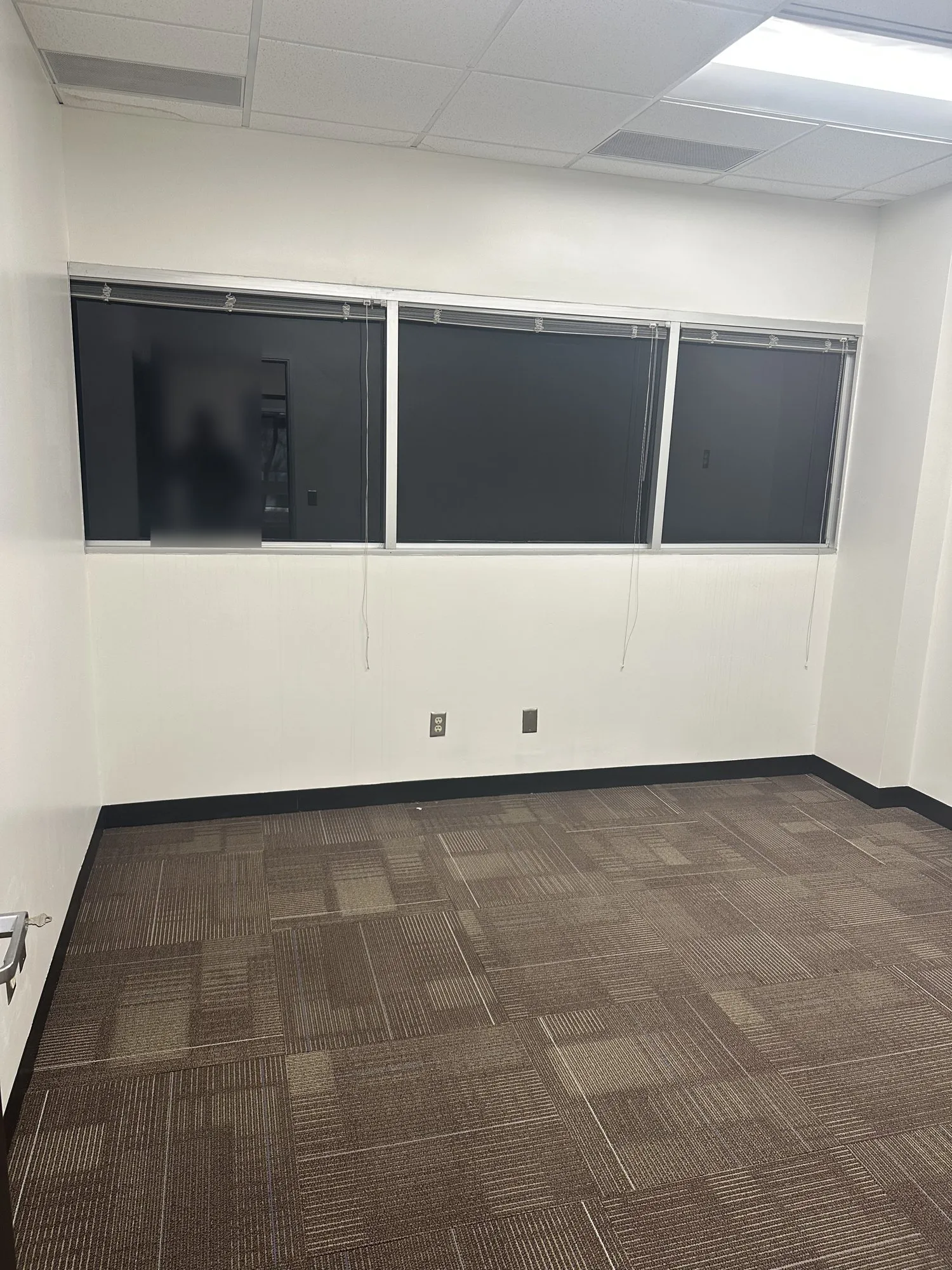
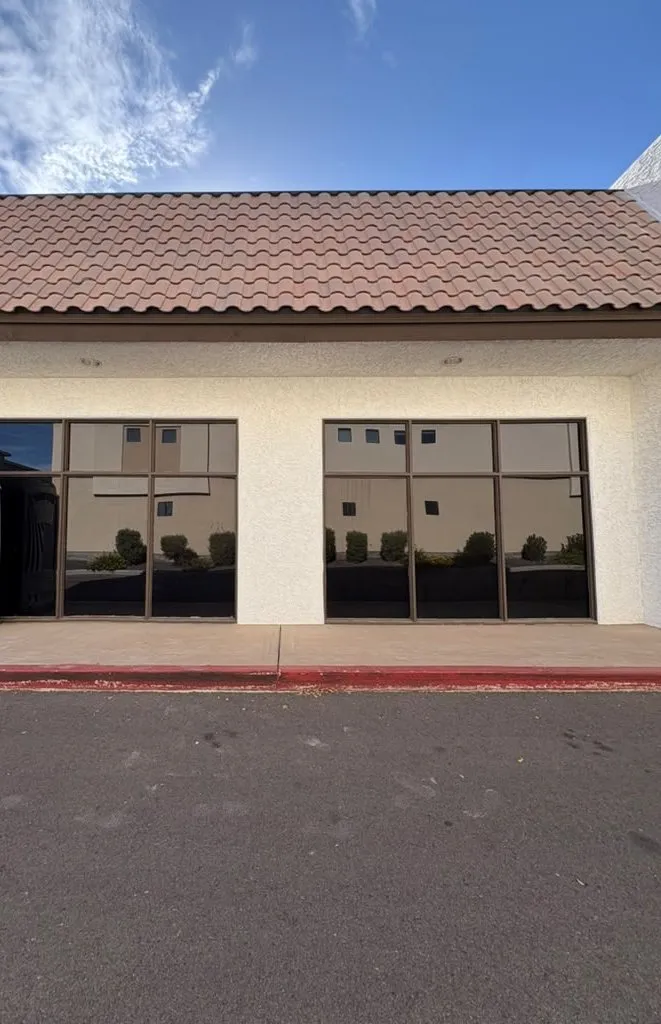
In August 2026 we installed XPEL Black Out on the storefront windows of Fly Dance Fitness, a fitness studio in Phoenix, so the glass reads as solid dark panels from the parking lot. The same month we blacked out a row of interior office windows for American Precious Metals in Scottsdale, turning clear glass between rooms into opaque panels. Both jobs are in our project gallery.
Blackout and spandrel window film in Scottsdale, AZ
American Precious Metals office blackout film
Scottsdale · Blackout and Spandrel Window Film ·
Blackout film on a row of interior office windows, turning clear glass into solid dark panels.
Blackout and spandrel window film in Phoenix, AZ
Fly Dance Fitness storefront blackout film
Phoenix · Blackout and Spandrel Window Film ·
XPEL Black Out on the storefront glass of a Phoenix fitness studio, so the windows read as solid dark glass from the street.
Related films
Related services
Blackout film is often part of a larger glass project. Storefronts that need a printed graphic instead of a solid color are covered on our custom graphics and wall murals page, and facade-scale work is on exterior and building envelope wraps. For glass that should stay clear but cut heat and glare, see commercial solar window film. Our guide to architectural window films covers how these products fit together on a building, and the commercial window tint guide walks through the rest of the options.
Part of our commercial window tinting services.
More commercial window tinting films
Guides
Commercial blackout and spandrel window film guides
Common questions
Commercial blackout and spandrel window film questions
Have a question about your glass? Ask us.
What is spandrel glass?
The glass industry defines spandrel glass as glass made near opaque and glazed over the parts of a wall that are meant to stay hidden from outside, such as floor slabs, structural columns and the space above a ceiling. Spandrel window film does the same job on glass that was installed clear.
Does blackout film block all light?
Close to it. XPEL lists Black Out at 0% visible light transmitted and Solar Gard lists Black Opaque at 0%. Madico's table lists its Black Out at 1%. In daylight, the glass reads as solid from both sides.
Can blackout film crack a window?
It can raise the risk on the wrong glass. An opaque film absorbs most of the solar energy that hits it, which heats the glass. Uneven heating between the sunny center and the shaded edges is what causes thermal stress cracks. That is why we check the glass type, the exposure and what sits behind the glass before we quote, and why some panes need a lighter film or no film at all.
Is there a white version?
Yes. XPEL White Out passes 9% of visible light and reflects 68% from outside on 3 mm glass, so it reads as a bright white panel instead of a dark one. It also absorbs much less solar energy than a black film, which can make it the safer choice on sunny elevations.
Can blackout film be removed later?
Yes. These are applied films, not paint. When a tenant changes or a room changes use, the film can be stripped and the glass returned to clear, or replaced with a frost or decorative film. Old film removal is part of the quote when it applies.
Can you match the look of existing spandrel panels?
Often, but not always exactly. Factory spandrel glass comes in many colors and finishes. We bring film samples to the site so you can hold them against your existing panels in daylight before deciding.
How is blackout film priced?
We quote it per project after measuring the glass and checking its type and exposure. The total depends on square footage, the film, access and whether old film or coatings have to come off first.
Free consultation
Book a free window tinting consultation
Tell us about your glass and we'll send a written proposal.
(480) 977-6994- Arizona: ROC Lic# 333727
Licensed, factory-authorized window film installers
- Arizona: ROC Lic# 333727
- Solar Gard / Saint-Gobain authorized dealer
- Armorcoat authorized installer
- XPEL authorized dealer
- Madico SafetyShield qualified dealer
- Full XPEL VISION line installed
- 25 years of window film experience
Because we're factory-authorized, film is installed to manufacturer spec and carries the manufacturer's warranty.