
Commercial Window Tinting
Bird Safe Window Film for Commercial Buildings
Bird safe window film is a patterned film that makes large panes of glass visible to birds, which otherwise see reflected sky and trees or a clear path through the glass. We install Solar Gard WingSafe and XPEL Bird Safe Dotted on lobbies, atriums, skybridges and campuses across Arizona, from $8.25 per square foot.
- From $8.25 per sq ft installed
- XPEL and Solar Gard bird-safe films
- Up to 10-year manufacturer warranty
Overview
Why birds hit office glass and how bird safe window film helps
Birds do not read glass the way people do. A large clean pane either reflects the sky, trees and landscaping around it, or it looks like an open path to whatever is on the other side. A glass corner, a skybridge or a lobby with windows on two sides can look like a gap a bird can fly through. To a bird, there is nothing there.
Lighting plays a part too. A lobby lit at night next to dark glass, or an atrium planted with trees behind the glass, can draw birds toward a surface they cannot see. Those conditions are common in modern office parks, campuses and civic buildings, where wide glass and planted courtyards are part of the design.
Buildings with a lot of glass, mature landscaping and open sky nearby are the ones facilities teams call us about. The answer is to give the glass a pattern birds can see. That is what bird-strike film does, and it is one of the specialty films in our commercial window tinting lineup.
Films
XPEL Bird Safe Dotted window film
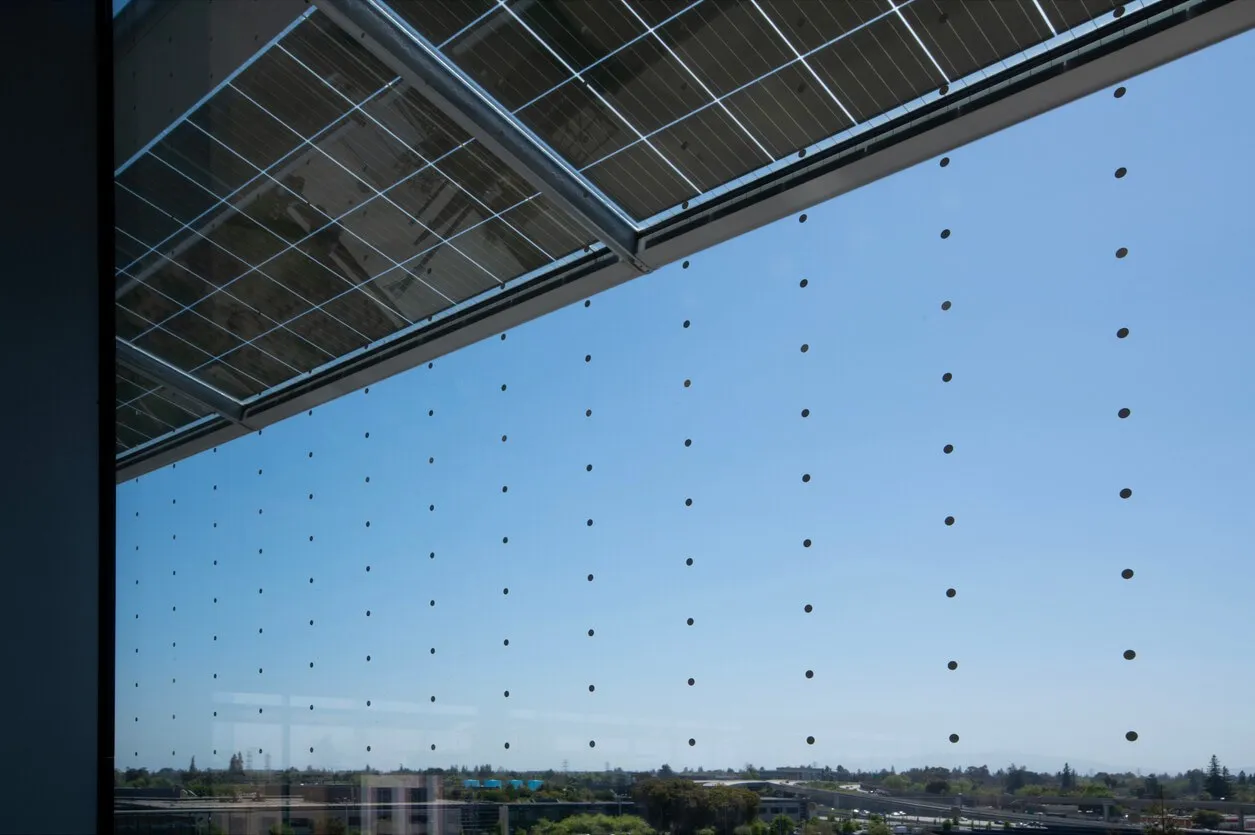
We install two bird-safe lines. The first is XPEL Bird Safe Dotted, part of the decorative series in the XPEL VISION line. It is a clear film printed with a regular pattern of dots. The dots interrupt the reflection on the glass and mark the pane as a solid surface.
From inside, the film stays mostly out of the way. XPEL publishes these figures on 3 mm glass:
- Visible light transmission: 88%, so rooms stay bright.
- Exterior reflectance: 10%, so the glass does not turn into a mirror.
- UV rejection: 99%, which also helps protect lobby furnishings and finishes from fading.
- Glare reduction: 2%. This is not a glare or heat-control film.
Because it passes most of the sun’s energy (XPEL lists a 0.82 solar heat gain coefficient on 3 mm glass), it will not do much for comfort. If a glass wall has both a bird problem and a heat problem, we will talk through the trade-offs during the survey, and our commercial solar window film page explains the heat side.
XPEL backs Bird Safe Dotted with a 5-year manufacturer warranty.
Solar Gard WingSafe and its Threat Factor ratings
The second line is Solar Gard WingSafe, which comes in six patterns. Each has a Threat Factor rating from the American Bird Conservancy, as published by Solar Gard on its US site. On that scale, a lower number is better:
- WingSafe Black Dot: Threat Factor 4, with a 10-year manufacturer warranty.
- WingSafe Horizontal: Threat Factor 10, with a 3-year manufacturer warranty.
- WingSafe Solar 80 Black Dot: Threat Factor 14, with a 10-year manufacturer warranty.
- WingSafe Dot: Threat Factor 15, with a 3-year manufacturer warranty.
- WingSafe White Dot: Threat Factor 19, with a 10-year manufacturer warranty.
- WingSafe Vertical: Threat Factor 20, with a 3-year manufacturer warranty.
The ratings let a design team pick a pattern against a target instead of guessing. Solar Gard measures WingSafe optical data on 6 mm clear glass, while XPEL uses 3 mm glass, so we present each brand’s figures on their own and do not line them up as if measured the same way. Warranties apply when the film is installed by an authorized dealer.
Buildings
Buildings that need bird strike prevention film
Glass-walled lobbies and entries
That face landscaping or open sky.Atriums and stairwell glass
That run the full height of a building.Skybridges and glass walkways
With glass on both sides, which look like open air.Glass corners
Where two panes meet and the building appears to have a gap.Schools, universities and campus buildings
With courtyards and mature trees.Nature centers, parks buildings, libraries and museums
Set in planted or natural surroundings.Office buildings near water features, golf courses or washes
We survey and install bird-safe film for commercial properties across the Phoenix and Tucson metros. Our Phoenix commercial window tinting and Tucson commercial window tinting pages describe how we schedule work on occupied buildings in each area.
Which panes
Deciding which panes to treat
Treating every window is rarely necessary. A targeted approach usually covers the problem at a lower cost:
Start with what you know
Maintenance and grounds staff often know which panes birds hit. Marks on the glass and reports from tenants help.Look at reflections
Glass that mirrors trees or sky, especially at low floors, is the most common trouble spot.Find the see-through paths
Corners, skybridges and lobbies with glass on opposite walls.Consider the landscaping
Glass next to trees, shrubs, fountains or feeders deserves attention.
During the site survey we walk the building with your facilities team, measure the candidate glass and note glass type, size and condition. The written proposal lists each pane we recommend treating so you can approve the scope in stages if you want to start with the worst areas.
Specs
Commercial bird safe window film specs
XPEL
| Film | Visible light transmitted | Total solar energy rejected | SHGC | UV blocked | Glare reduction |
|---|---|---|---|---|---|
| Bird Safe Dotted | 88% | 18% | 0.82 | 99% | 2% |
Manufacturer-published values measured on 1/8" (3 mm) glass; results on your windows vary by glass type. Sources: spec sheet
Solar Gard WingSafe
| Film | Visible light transmitted | Total solar energy rejected | SHGC | UV blocked | Glare reduction |
|---|---|---|---|---|---|
| WingSafe Black Dot | 87% | n/a | 0.79 | n/a | 1% |
| WingSafe White Dot | 87% | n/a | 0.79 | n/a | 1% |
| WingSafe Solar 80 Black Dot | n/a | n/a | n/a | n/a | n/a |
| WingSafe Horizontal | n/a | n/a | n/a | n/a | n/a |
| WingSafe Dot | n/a | n/a | n/a | n/a | n/a |
Manufacturer-published values measured on 1/4" (6 mm) clear glass; results on your windows vary by glass type. Sources: spec sheet
Installing bird-safe film on lobbies and atriums
Large commercial glass brings access questions. Atrium and curtain wall panes may need a lift or scaffold, which adds 15% to the installed price. We plan the work around building hours, and lobby or entry work can be scheduled early morning, after hours or on weekends so the main entrance stays usable.
The crew protects the floor and nearby finishes, cleans the glass, applies and aligns the film so the dot pattern runs consistently from pane to pane, and trims it to the frame. A slight haze is normal while the film cures.
Living with the film day to day
Bird-safe film is meant to stay on the glass, so it needs to fit into normal building operations. Window washers and janitorial staff should clean treated glass with a soft cloth or squeegee and a mild, non-abrasive cleaner, and should not use razor blades or scrapers on the film. We leave care instructions with the facilities team at closeout so they can be passed to the window cleaning contractor.
The film can be removed from the glass later without replacing the pane. That matters when a lobby is renovated, a tenant changes the entry, or landscaping is removed and the problem goes away. It also means the film can be added in phases: treat the worst glass first, watch what happens over a season, and extend the treatment if strikes continue on other panes.
What we need from you to quote it
A good proposal starts with a few pieces of information from the property team:
- the locations where birds have hit, even if only from staff reports;
- photos of the glass from outside, ideally showing what it reflects;
- whether the glass is single pane, insulated or laminated, if you know;
- any access limits, such as lobby hours, security escort rules or lift restrictions;
- whether the project is tied to a renovation or design requirement.
With that, the site visit is shorter and the scope is easier to approve.
Bird-safe glazing data for architects and owners
When bird-safe glazing comes up during a renovation or tenant improvement, film is a way to treat existing glass without replacing it. We provide the XPEL and Solar Gard spec sheets, including the published WingSafe Threat Factor ratings, so the design team can review each product. If your project has a specific bird-safe glazing requirement, share it with us and we will provide the manufacturer’s documentation for your team to compare against it. We do not certify that a film meets any particular standard.
Cost
Bird strike window film cost
Installed rates for bird-strike film start at $8.25 per square foot. Price depends on the amount of glass treated, pane sizes, removal of any old film (which adds $4.50 per square foot) and access. The proposal names the film and its manufacturer warranty for each pane.
Commercial bird safe window film cost per square foot
Installed prices start at $8.25 per square foot. Your written proposal is based on measured glass, film choice and access.
Related films
Related options
Glass that birds hit is often glass people walk into too. A frosted band can mark large interior panes; see commercial frosted window film. For printed patterns, graphics and branding on storefront glass, see commercial decorative window film.
Part of our commercial window tinting services.
More commercial window tinting films
Guides
Commercial bird safe window film guides
What is XPEL Bird Safe Dotted?
It is a decorative film from the XPEL VISION line printed with a pattern of dots. The pattern breaks up reflections and gives birds a visual cue that the glass is a solid surface, while people inside still see through it.
Will the dot pattern block the view from inside?
Very little. XPEL lists Bird Safe Dotted at 88% visible light transmission on 3 mm glass, so the glass stays bright and the view stays open. Most people notice the dots up close and stop noticing them from across the room.
Do we need to cover every window on the building?
Usually not. We focus on the glass where strikes happen or are most likely: large reflective panes, glass corners, skybridges and windows facing trees or water. Facilities staff often already know which panes those are.
Does bird-strike film guarantee no more collisions?
No film can promise that. Bird Safe Dotted is designed to make glass easier for birds to see. Results depend on the site, the glass treated and the species in the area.
Does the film change how the building looks from outside?
The dots are visible on the glass from outside, which is how the film works. XPEL lists exterior reflectance at 10% on 3 mm glass, so the treated glass does not take on a mirrored look.
Can bird-strike film be installed on large atrium glass?
Yes. High atrium and curtain wall glass is often where birds hit. That work may need a lift, which adds 15% to the installed price.
Free consultation
Book a free window tinting consultation
Tell us about your glass and we'll send a written proposal.
(480) 977-6994- Arizona: ROC Lic# 333727
Licensed, factory-authorized window film installers
- Arizona: ROC Lic# 333727
- Solar Gard / Saint-Gobain authorized dealer
- Armorcoat authorized installer
- XPEL authorized dealer
- Madico SafetyShield qualified dealer
- Full XPEL VISION line installed
- 25 years of window film experience
Because we're factory-authorized, film is installed to manufacturer spec and carries the manufacturer's warranty.