
Commercial Window Tinting
Anti-Graffiti Window Film for Commercial Glass
Anti-graffiti window film is a clear, sacrificial film applied over storefront, transit and public building glass. When vandals scratch, etch or tag the surface, the damaged film is peeled off and replaced instead of the glass. We install XPEL Anti-Graffiti film in 4 mil and 6 mil across Arizona, from $8.25 per square foot.
- From $8.25 per sq ft installed
- A sacrificial layer over the glass
- 4 or 6 mil clear film
Overview
Anti-graffiti window film as a sacrificial layer
Graffiti on glass is rarely just paint. Taggers use keys, stones, glass cutters and etching compounds that cut into the surface, and once glass is scratched there is often nothing to do but replace it. For a storefront owner or a facilities team, that means a glazier, a boarded window and a repeat bill the next time it happens.
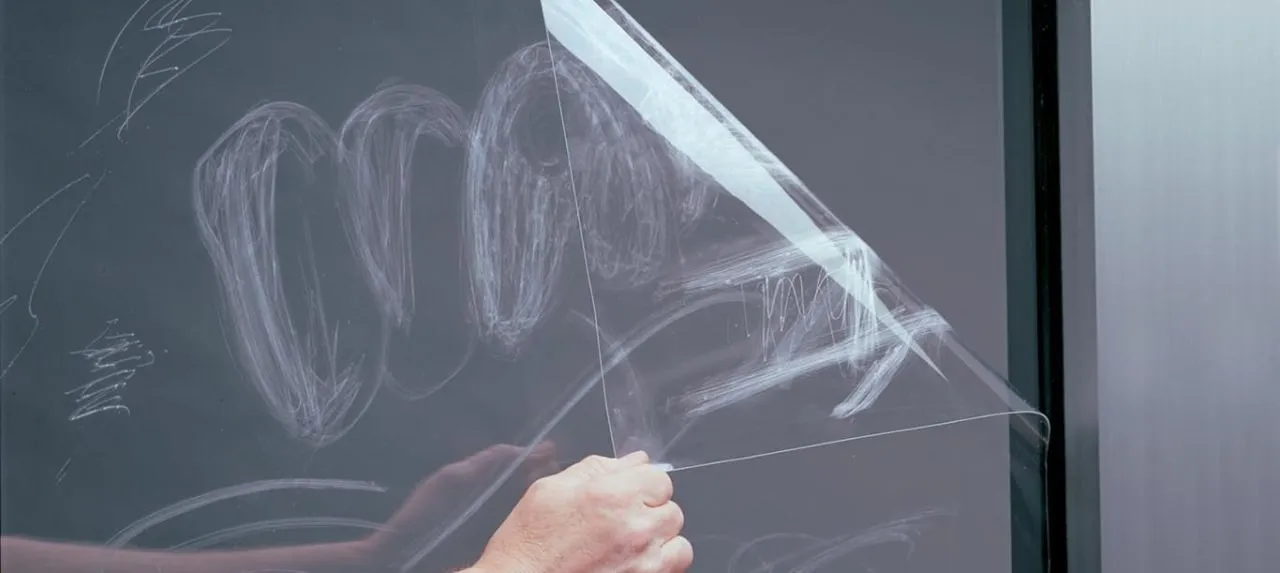
Anti-graffiti window film changes that equation. It is a clear, tough polyester film applied over the exposed face of the glass. The film takes the scratches and the tags. When a panel is damaged, we peel off the film and apply a new piece, and the glass underneath stays untouched. The film is a consumable, much like paint on a wall, and it is designed to be replaced.
It is one of the specialty products in our commercial window tinting work, installed for property managers, business owners, school districts and public agencies across Arizona.
Part of our commercial window tinting services.
Where it's used
Where businesses use graffiti protection film
Anti-graffiti film makes the most sense on glass that is both easy to reach and expensive or slow to replace:
Retail storefronts and restaurant windows,
Especially on streets and strip centers that see repeat tagging.Transit shelters, station glass and bus stop panels
Schools and campuses,
Including entry doors, sidelights and ground-floor classroom windows.Public buildings,
Such as libraries, community centers and city facilities.Elevator cabs and glass railings
In parking garages, malls and office lobbies.Restroom mirrors
In public and commercial restrooms.Glass-walled lobbies and vestibules
With large tempered panes that would take time to reorder.
Storefront glass that also carries branding or needs screening can be planned together with decorative window film or custom window graphics, and we lay out which film goes on which surface during the survey.
Clear anti-graffiti film for glass
A protective film is only useful if it does not change how the glass looks. XPEL publishes its Anti-Graffiti film at 89% visible light transmission and 9% exterior reflectance on 3 mm glass, with 1% glare reduction. In practice the glass reads as clear: displays, menu boards and signage behind it look the same.
The film also blocks 99% of UV on 3 mm glass, according to XPEL. That is a side benefit for retailers, since UV is the part of sunlight that fades merchandise in window displays. If fading is a bigger concern than vandalism on a given elevation, see our UV protection window film page.
Thickness
4 mil or 6 mil: picking a thickness
XPEL makes its Anti-Graffiti film in two thicknesses, 4 mil and 6 mil. Both share the same published optical data, so the choice comes down to how much abuse the glass sees.
4 mil
Suits glass that is tagged occasionally, mostly with markers or paint, and where keeping the cost of each replacement down matters most.6 mil
Gives more material between a sharp tool and the glass, and it is our usual recommendation for transit, schools and locations with a history of scratching or etching.
We look at the damage you have already had, if any, before recommending one. Photos from past incidents help. On a large property, it is common to use 6 mil on the most exposed ground-level glass and 4 mil on glass that sees less traffic.
Film for polycarbonate and acrylic panels
Not every vandalized panel is glass. Bus shelters, transit stops, kiosks, guard booths and some storefront and stair panels use polycarbonate (Lexan) or acrylic (Plexiglas), which scratch and etch more easily than glass. For those we install Madico Blister Free 600, a 7 mil film Madico makes for polycarbonate, acrylic and other uncoated plastics. Madico describes it as optically clear and distortion free, with an adhesive made to resist the moisture changes that cause blistering on plastic. Like the glass films above, it is a sacrificial layer that takes graffiti, scratches and acid etching and is replaced when it is damaged. Madico also lists it as rejecting up to 44% of UV and meeting the EN 45545 fire standard, and as holding fragments together if the panel breaks. Tell us what the panels are made of when you request a proposal, and we will specify the film made for that material.
Specs
Commercial anti-graffiti window film specs
XPEL Anti-Graffiti
| Film | Visible light transmitted | Total solar energy rejected | SHGC | UV blocked | Glare reduction |
|---|---|---|---|---|---|
| Anti-Graffiti 4mil (4 mil) | 89% | 17% | 0.83 | 99% | 1% |
| Anti-Graffiti 6mil (6 mil) | 89% | 17% | 0.83 | 99% | 1% |
Manufacturer-published values measured on 1/8" (3 mm) glass; results on your windows vary by glass type. Sources: spec sheet
Replacement
How a damaged panel is replaced
The value of the film shows up the first time it is damaged. A typical replacement goes like this:
- STEP 1You send photos of the damaged panels, or we inspect them on site.
- STEP 2We schedule a service visit, often early morning or after closing for storefronts.
- STEP 3The crew removes the damaged film from each affected pane, cleans the glass and applies new film.
- STEP 4The area is cleaned and the glass is ready for business.
There is no glass to order, no frame work and no boarding up. Because we keep a record of the film and the panes on your property, replacement visits can be planned quickly. Paint and marker can often be cleaned off the film without replacing it at all; deep scratches and etching are what call for a new panel.
Day-to-day care for maintenance staff
Film on the exposed face of the glass gets cleaned along with everything else, so it helps to give janitorial and maintenance staff a few rules:
- Clean with a soft cloth, sponge or squeegee and a mild, non-abrasive glass cleaner.
- Do not use razor blades, scrapers or abrasive pads on the glass. They scratch the film the same way a vandal would.
- For paint or marker, try removal on the film before calling for replacement. Many tags come off.
- Watch the edges. Lifting or peeling at an edge is a sign a panel should be looked at before it gets worse.
A short care sheet goes to the property manager at closeout so it can be passed to whoever cleans the glass.
Building replacement into the maintenance plan
Because the film is meant to be replaced, it works best when it is treated as a maintenance item rather than a one-time purchase. Property managers who handle many sites, such as retail centers, transit agencies and school districts, often keep a running list of treated glass by location and plan for some replacement each year based on the damage they actually see.
That approach has a few advantages. The cost of a vandalism incident becomes predictable. Repairs happen as a scheduled service call instead of an emergency glass order. And the storefront or entry does not sit boarded up while new glass is made. We can quote the initial install and a per-panel replacement price in the same proposal so the numbers are ready when you need them.
Pairing with existing solar or security window film
Some storefronts already have solar or security film on the inside of the glass. Anti-graffiti film goes on the exposed surface that vandals reach, so it can often protect glass that already has a film on its other side. We confirm the glass type and any existing films during the survey before recommending a layout.
Anti-graffiti film is about the surface, not about keeping people out. It does not hold broken glass together. If break-ins are part of the problem, security window film is the product for that job, and our article on commercial window security explains the options.
Cost
Anti-graffiti film cost and installation
Installed rates for anti-graffiti film start at $8.25 per square foot. Price depends on the thickness, square footage, the size and number of panes, removal of old film ($4.50 per square foot) and access. Upper floor or lift access adds 15%.
Every project gets a written proposal based on measured glass, and we can price ongoing replacement work separately so you can plan for it in a maintenance budget. XPEL warrants its Anti-Graffiti films for 3 years when installed by an authorized dealer. Since the film is designed to be sacrificed, the warranty covers the product itself, not damage from vandalism.
Commercial anti-graffiti window film cost per square foot
Installed prices start at $8.25 per square foot. Your written proposal is based on measured glass, film choice and access.
Related films
More commercial window tinting films
Guides
Commercial anti-graffiti window film guides
Common questions
Commercial anti-graffiti window film questions
Have a question about your glass? Ask us.
Why replace film instead of the glass?
Scratched or etched glass usually cannot be cleaned, and replacing large or tempered panes can mean ordering glass, boarding the opening and paying a glazier. A damaged film panel comes off the glass, and new film goes on in its place.
Can paint and marker be cleaned off the film?
Often, yes. Many paint and marker tags can be cleaned off the film surface with a suitable cleaner. Scratching and etching that cut into the film cannot, and those panels are the ones we replace.
Will people notice the film on the glass?
Very little. XPEL lists its Anti-Graffiti films at 89% visible light transmission with 1% glare reduction on 3 mm glass, so storefront displays and signage look the way they did before.
Should we choose 4 mil or 6 mil?
Both have the same optical properties. The 6 mil film is thicker, which gives more material between a scratching tool and the glass. Locations that see repeat or heavy vandalism are usually better served by 6 mil.
Does anti-graffiti film stop the glass from breaking?
No. It is designed to protect the surface, not to hold glass together. For break-in resistance, see our commercial security window film page.
Can anti-graffiti film go on elevator glass and mirrors?
Yes. Elevator cab glass, restroom mirrors and glass railings in public buildings are common targets, and the same replace-the-film approach applies to them.
Does the film block UV?
Yes. XPEL lists both thicknesses at 99% UV rejection on 3 mm glass, which helps protect window displays from fading.
Free consultation
Book a free window tinting consultation
Tell us about your glass and we'll send a written proposal.
(480) 977-6994- Arizona: ROC Lic# 333727
Licensed, factory-authorized window film installers
- Arizona: ROC Lic# 333727
- Solar Gard / Saint-Gobain authorized dealer
- Armorcoat authorized installer
- XPEL authorized dealer
- Madico SafetyShield qualified dealer
- Full XPEL VISION line installed
- 25 years of window film experience
Because we're factory-authorized, film is installed to manufacturer spec and carries the manufacturer's warranty.